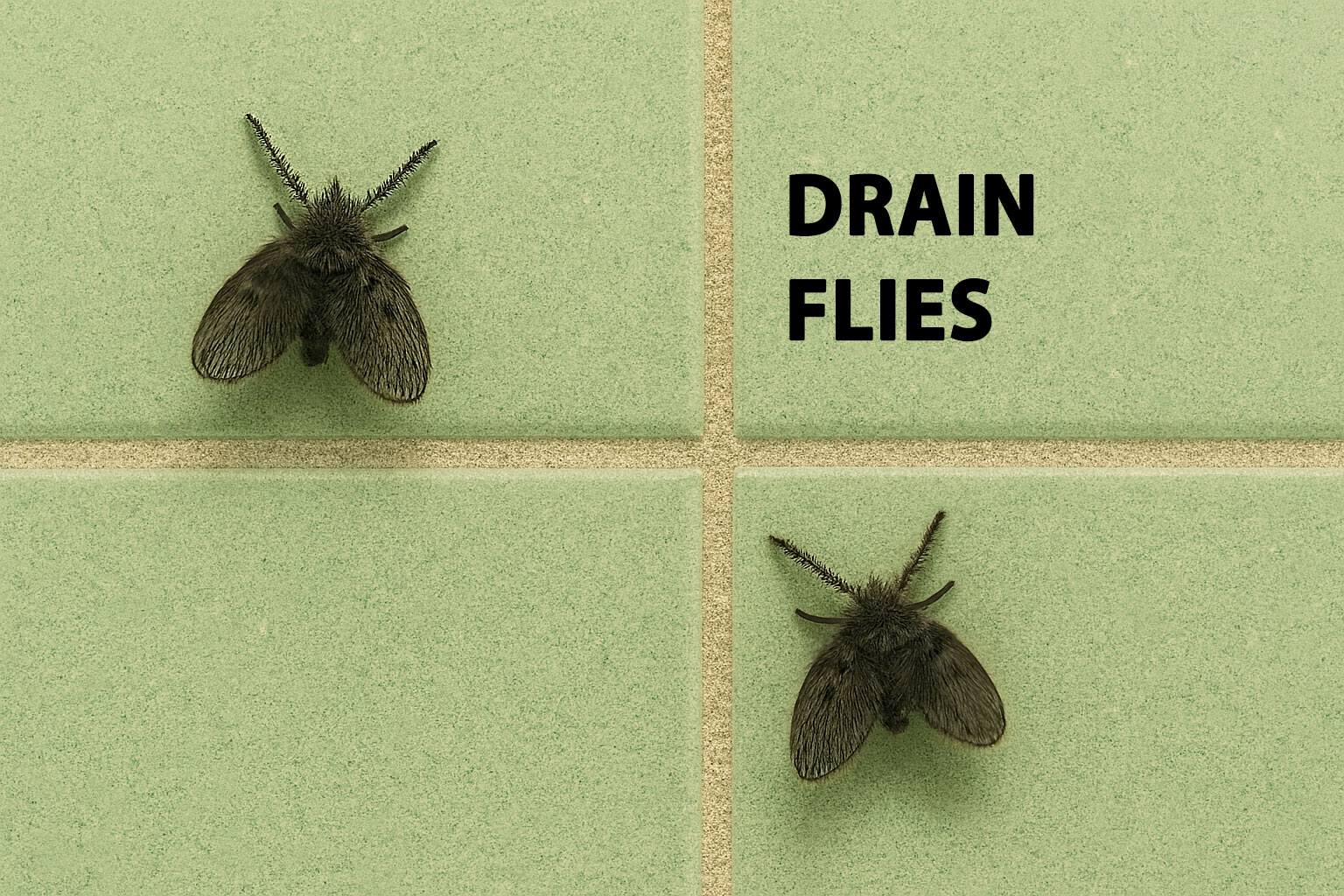
If you’ve noticed tiny, fuzzy flies hovering near your sinks, showers, or basement drains, you’re not alone. These pests are known as drain flies (also called moth flies, filter flies, or sewer gnats). While they don’t bite or spread serious diseases, they multiply quickly and can become an ongoing nuisance.
To get rid of drain flies effectively, you first need to understand where they come from. This guide explains their common sources, breeding habits, and what you can do to stop them at the source.
What Are Drain Flies?
Drain flies are small insects, typically 1/16 to 1/4 inch long, with fuzzy bodies and moth-like wings. They are weak fliers and usually hover close to their breeding site.
These pests thrive in damp environments with organic matter, which makes drains, sewers, and septic systems the perfect home.
Where Do Drain Flies Come From?
Drain flies are drawn to moisture and organic buildup. They often appear in:
1. Drains and Pipes
Kitchen and bathroom drains are the most common sources. Inside pipes, a slimy layer of biofilm builds up over time. This organic matter becomes food and a breeding ground for larvae.
2. Shower and Bathtub Overflows
Moisture and soap scum inside overflows provide an ideal environment for drain flies.
3. Floor Drains and Basements
Damp, dark spaces like laundry rooms or basements with floor drains are another hotspot for infestations.
4. Septic Tanks and Sewer Lines
Cracks or leaks in septic tanks or sewer pipes allow drain flies to breed underground before emerging inside your home.
5. Leaks and Standing Water
Leaky pipes, clogged gutters, and puddles near plumbing fixtures can also attract drain flies.
The Life Cycle of Drain Flies
Understanding their life cycle helps explain how infestations begin:
- Eggs – Females lay 30–100 eggs in organic buildup.
- Larvae – Hatch within 48 hours, feeding on biofilm in drains.
- Pupae – Mature in 9–15 days.
- Adults – Live for 1–3 weeks, staying close to drains where they reproduce.
Because of this rapid cycle, a small problem can quickly become a large infestation.
How Do Drain Flies Enter Your Home?
Drain flies don’t typically enter from the outside like houseflies. Instead, they emerge from drains, sewers, and plumbing systems inside your home.
Common entry points include:
- Bathroom and kitchen sink drains
- Shower and tub drains
- Basement or garage floor drains
- Cracks in plumbing systems
If you see them suddenly, it usually means there’s a buildup of organic material in one of your drains.
Why It’s Important to Address the Source
Drain flies themselves aren’t dangerous, but they’re a clear sign of plumbing or sanitation issues. Ignoring them can allow infestations to grow and may even point to hidden leaks or damaged pipes.
How to Prevent Drain Flies
Once you know where drain flies come from, you can take steps to prevent them:
- Clean drains weekly with boiling water or enzymatic cleaners.
- Scrub pipes with a drain brush to remove slime buildup.
- Fix leaks quickly to eliminate standing water.
- Ventilate bathrooms and basements to reduce moisture.
- Inspect septic tanks and sewer lines if infestations persist.
Frequently Asked Questions (FAQ)
What is the main source of drain flies?
The primary source is organic buildup (biofilm) inside drains and pipes.
Can drain flies come from toilets?
Yes, they can breed in toilet tanks, bowls, and nearby sewer lines if organic matter builds up.
Why do drain flies suddenly appear?
They often appear when moisture and organic debris accumulate in drains, creating a breeding site.
Do drain flies come from outside?
Not usually. They mostly breed inside drains and plumbing systems rather than flying in from outside.
How can I find where drain flies are coming from?
Cover drains with clear tape overnight. If flies stick to the underside, that drain is the source.
Conclusion
So, where do drain flies come from? They originate from moist, organic-rich environments like drains, sewers, septic systems, and areas with standing water. While not dangerous, their presence signals plumbing issues that need attention.
By cleaning drains, fixing leaks, and reducing moisture, you can eliminate their breeding grounds and prevent infestations for good.