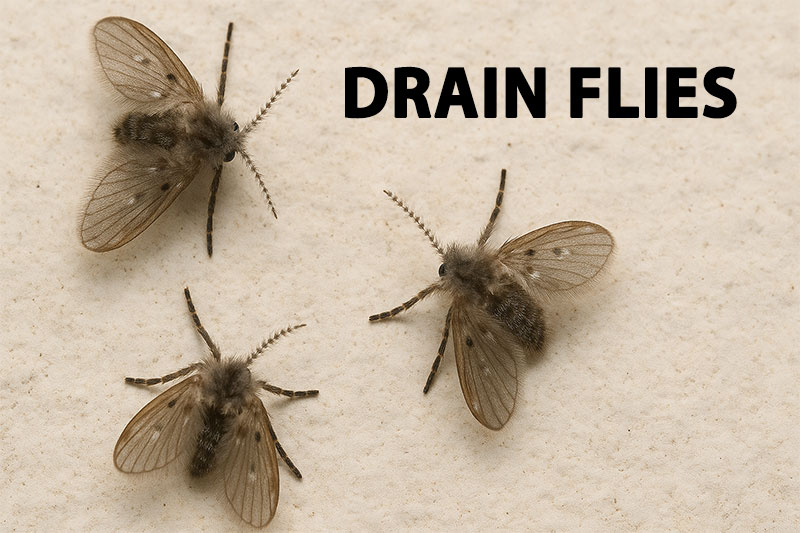
Have you spotted tiny, fuzzy insects hovering around your bathroom sink or kitchen drain? If so, you may be dealing with drain flies (also known as moth flies, sewer gnats, or filter flies).
While they’re harmless compared to other household pests, identifying drain flies correctly is the first step in controlling and eliminating an infestation. In this guide, we’ll explain what drain flies look like, how to tell them apart from similar insects, and where you’re most likely to find them.
What Are Drain Flies?
Drain flies are small insects that thrive in damp environments with decaying organic matter. They are most commonly found in:
- Sink and shower drains
- Floor drains in basements or laundry rooms
- Septic tanks and sewer lines
- Areas with standing water or leaks
They feed and breed in a slimy layer called biofilm, which coats the inside of drains.
What Do Drain Flies Look Like?
Drain flies are easy to spot once you know their unique features.
Key Characteristics of Drain Flies:
- Size: Very small, about 1/16 to 1/4 inch long.
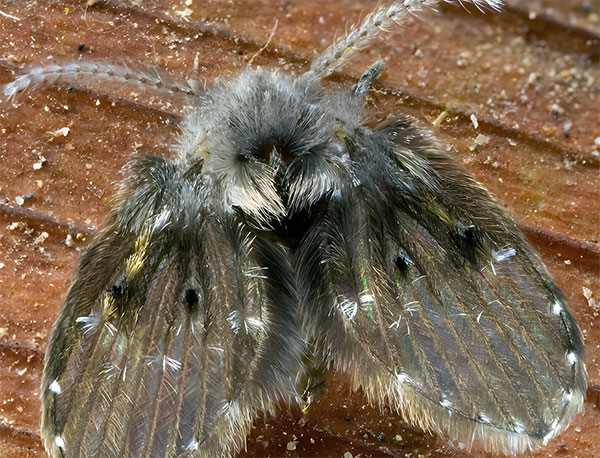
- Color: Light gray, tan, or black, with a fuzzy body.
- Wings: Covered in fine hairs, giving them a moth-like appearance. Wings are held tent-like over the body when at rest.
- Body Shape: Rounded and fuzzy, unlike the sleek look of fruit flies.
- Flight Pattern: Weak fliers, usually hovering close to drains or crawling on walls instead of flying long distances.
How to Tell Drain Flies Apart from Other Flies
Many people confuse drain flies with fruit flies or gnats, but there are clear differences:
- Drain Flies – Fuzzy, moth-like, gray or black, stay near drains.
- Fruit Flies – Reddish eyes, attracted to fruit and trash, often found in kitchens.
- Fungus Gnats – Slender, mosquito-like, usually found in houseplant soil.
Knowing the difference helps you choose the right method to get rid of them.
Where to Spot Drain Flies
Drain flies usually rest on:
- Bathroom and kitchen walls near drains
- Tiles and mirrors in humid areas
- Around sinks, bathtubs, and showers
- Near windows at night when lights are on
Because they’re weak fliers, you’ll often see them crawling on surfaces rather than buzzing around.
Life Cycle of Drain Flies
Understanding what they look like at different stages of their life cycle also helps with identification:
- Eggs: Tiny, difficult to see, laid in clusters in slimy organic matter.
- Larvae: Worm-like, legless, and feed on biofilm inside drains.
- Pupae: Transition stage before becoming adults.
- Adults: Fuzzy, moth-like flies that live for about 1–3 weeks.
Why Identification Matters
Identifying drain flies correctly ensures you tackle the real source of the problem. Since they breed inside drains, killing adult flies won’t solve the issue—you need to remove the slime and buildup inside pipes to break the cycle.
How to Confirm You Have Drain Flies
If you’re unsure whether the flies in your home are drain flies, try this simple test:
- Cover the drain opening with clear tape (sticky side down).
- Leave it overnight.
- If tiny, fuzzy flies are stuck to the tape, your drain is the source.
Frequently Asked Questions (FAQ)
What color are drain flies?
They are usually gray, tan, or black, with a fuzzy appearance.
How big are drain flies?
They measure between 1/16 and 1/4 of an inch in length.
Do drain flies look like moths?
Yes, their fuzzy wings give them a moth-like appearance, which is why they’re sometimes called “moth flies.”
Are drain flies the same as fruit flies?
No, drain flies are fuzzy and found near drains, while fruit flies are sleeker, with reddish eyes, and found near food or trash.
Can you see drain fly larvae?
Yes, they look like tiny, worm-like creatures in the slimy buildup inside drains.
Conclusion
So, what do drain flies look like? They are tiny, fuzzy, moth-like flies that stay close to drains and damp areas. Unlike fruit flies or gnats, they are easy to recognize once you know their size, fuzzy appearance, and weak flight pattern.
Correct identification is the first step toward eliminating them. Once you confirm you have drain flies, the next step is cleaning drains, removing biofilm, and maintaining proper sanitation to keep them away for good.