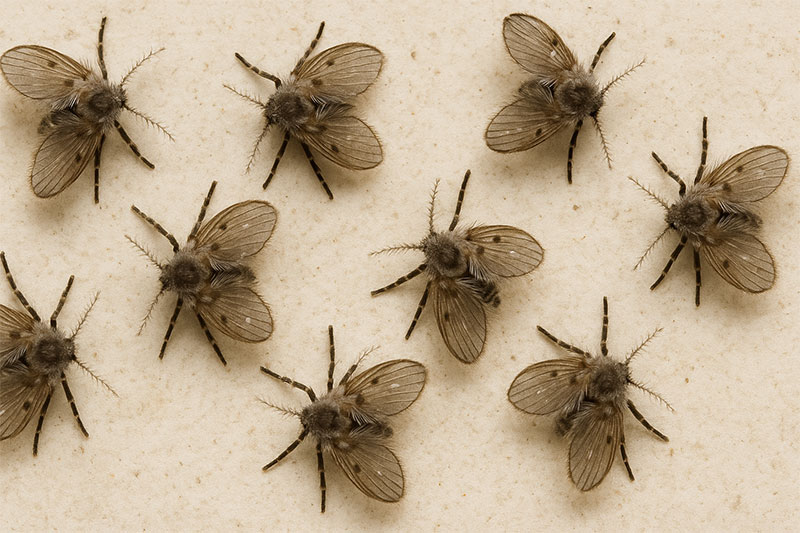
If you’ve seen tiny, fuzzy flies hovering near your sink, shower, or basement drain, you’re likely dealing with drain flies (also called moth flies, sewer gnats, or filter flies). These pests are harmless in small numbers but can quickly multiply into a frustrating infestation.
The key to eliminating drain flies is knowing where they come from. So, what causes drain flies, and why do they appear in homes and businesses?
This guide explains the main causes of drain fly infestations, how to identify them, and what steps you can take to prevent them.
What Are Drain Flies?
Drain flies are small insects, about 1/16 to 1/4 inch long, with fuzzy bodies and moth-like wings. They thrive in damp, organic-rich environments and are commonly found inside drains, sewers, and septic systems.
Unlike fruit flies, which are drawn to overripe fruit, drain flies are attracted to stagnant water and decaying organic matter.
The Main Causes of Drain Flies
1. Organic Buildup in Drains
The most common cause of drain flies is biofilm—a slimy layer of organic matter that forms inside drains and pipes. This buildup provides food for larvae and a breeding ground for adult flies.
2. Standing Water
Any stagnant water in or around your home can attract drain flies. Common sources include:
- Slow or clogged drains
- Leaky pipes under sinks
- Floor drains in basements or laundry rooms
- Overflows in bathtubs or sinks
3. Rarely Used Drains
Drains that aren’t used frequently can collect stagnant water and organic debris, creating an ideal environment for drain flies.
4. Septic Tank or Sewer Issues
Cracked pipes, septic backups, or leaks in sewer lines can all create breeding sites for drain flies. These infestations are often larger and more persistent.
5. Moisture and Humidity
Bathrooms, kitchens, and basements with poor ventilation often stay damp, encouraging biofilm buildup and providing the perfect habitat for drain flies.
How to Tell If You Have Drain Flies
- Small, moth-like flies hovering near drains
- Flies resting on walls, tiles, or near windows
- Increased activity at night when lights are on
- Discovering larvae (tiny, worm-like creatures) in drains
A simple way to confirm the source is the tape test: cover a suspect drain with clear tape overnight. If flies stick to the underside, you’ve found the breeding ground.
Why It’s Important to Address the Cause
While drain flies are not dangerous, they are a sign of poor sanitation or plumbing problems. If left untreated, infestations can worsen and spread throughout your home.
Eliminating the cause—whether it’s a clogged drain, leaky pipe, or stagnant water—is the only way to stop drain flies permanently.
How to Prevent Drain Flies
Once you understand what causes drain flies, prevention becomes much easier. Here’s how to keep them away:
- Clean drains weekly with boiling water or enzymatic cleaners.
- Scrub pipes with a long drain brush to remove biofilm.
- Fix leaks to prevent standing water under sinks or appliances.
- Ventilate damp areas like bathrooms and basements.
- Schedule plumbing inspections if infestations keep returning.
Frequently Asked Questions (FAQ)
What is the main cause of drain flies?
The primary cause is organic buildup (biofilm) inside drains, which provides food and breeding grounds for larvae.
Can drain flies come from a toilet?
Yes, if organic matter builds up in the toilet bowl, tank, or nearby sewer lines, drain flies can breed there.
Why do drain flies suddenly appear?
They often appear when moisture and organic matter accumulate in drains or pipes, creating a breeding environment.
Do drain flies mean my house is dirty?
Not necessarily. Even clean homes can get drain flies if there’s stagnant water or hidden plumbing issues.
How do I stop drain flies permanently?
The key is to eliminate their breeding grounds by cleaning drains, fixing leaks, and maintaining proper plumbing.
Conclusion
So, what causes drain flies? In short: stagnant water, organic buildup, and poor plumbing conditions. While they may not be harmful, they are a clear sign of an underlying issue in your drains or pipes.
By addressing these causes with regular cleaning, leak repairs, and preventive maintenance, you can eliminate drain flies and keep them from coming back.