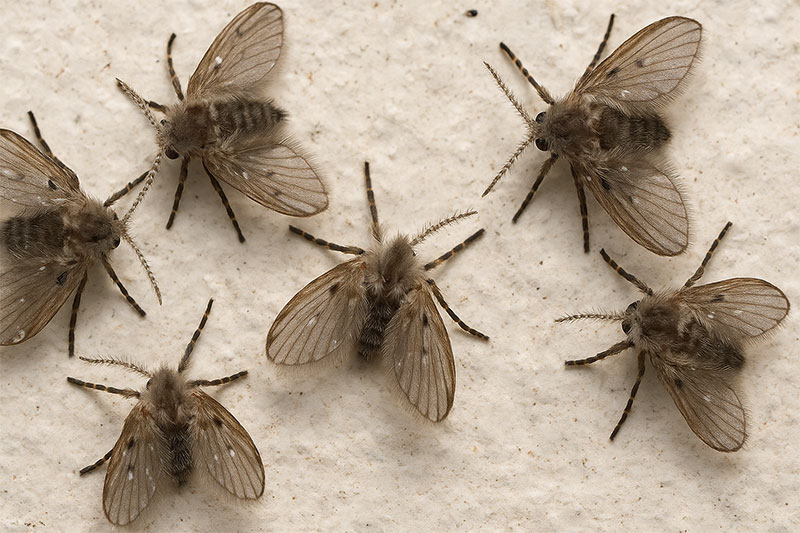
If you’ve noticed tiny, fuzzy flies hovering around your sinks, showers, or drains, chances are you’re dealing with drain flies (also called moth flies, sewer gnats, or filter flies). While they don’t bite or cause direct harm, they reproduce quickly and can become a persistent nuisance if left untreated.
The good news is that you can kill drain flies and prevent them from coming back with the right methods. In this guide, we’ll explain how to identify drain flies, how to kill them effectively, and what steps you can take to prevent reinfestation.
What Are Drain Flies?
Drain flies are small insects, usually 1/16 to 1/4 of an inch long, with fuzzy bodies and moth-like wings. They thrive in moist environments where organic matter accumulates, such as:
- Bathroom and kitchen drains
- Shower and tub overflows
- Floor drains in basements or laundry rooms
- Septic tanks and sewer lines
They breed in a slimy substance known as biofilm, which forms inside pipes when organic debris and moisture build up.
How to Kill Drain Flies Quickly
1. Boiling Water Flush
Pouring boiling water down the drain is one of the simplest methods to kill drain fly larvae. Repeat this 1–2 times per day for a week to disrupt their breeding cycle.
2. Baking Soda and Vinegar
A natural and effective solution is a baking soda-vinegar treatment:
- Pour ½ cup of baking soda down the drain.
- Follow with 1 cup of vinegar.
- Let the mixture foam for 15 minutes.
- Rinse with hot water.
This kills some larvae while loosening the organic buildup that supports their growth.
3. Enzymatic Drain Cleaners
Unlike chemical cleaners, enzymatic cleaners use bacteria or enzymes to break down organic matter in pipes. These are highly effective at removing the biofilm where drain flies breed, making them a long-term solution.
4. Drain Brush or Pipe Cleaning
Physically scrubbing the drain with a long, flexible pipe brush ensures you remove the sticky film that chemical or natural cleaners might not reach.
5. Traps to Kill Adult Flies
While cleaning the drains targets larvae, you can reduce the number of adult flies by using:
- Sticky traps placed near drains.
- Apple cider vinegar traps (a bowl of vinegar with a drop of dish soap).
- UV light insect traps to attract and kill flies.
6. Chemical Drain Cleaners (With Caution)
If natural methods don’t work, chemical drain cleaners can kill larvae and biofilm. However, they should be used carefully, especially in older plumbing systems, as they may cause damage over time.
Preventing Drain Flies from Coming Back
Killing drain flies is only half the battle. To prevent reinfestation:
- Flush drains weekly with boiling water.
- Use enzymatic cleaners monthly to keep drains free of biofilm.
- Fix leaks quickly to eliminate standing water.
- Clean sink stoppers and overflow holes regularly.
- Improve ventilation in bathrooms and kitchens to reduce humidity.
When to Call a Professional
If you’ve tried all the above methods and still can’t get rid of drain flies, the problem may be bigger than you think. Persistent infestations often point to broken pipes, clogged sewer lines, or hidden water leaks. In these cases, calling a pest control expert or plumber is the best solution.
Frequently Asked Questions (FAQ)
What kills drain flies instantly?
Boiling water and chemical cleaners can kill larvae quickly, while sticky traps or UV light traps work on adult flies.
Can bleach kill drain flies?
Bleach may kill some larvae, but it usually isn’t effective at removing the biofilm where flies breed.
What home remedy kills drain flies?
A mixture of baking soda and vinegar, followed by hot water, is one of the most effective home remedies.
How long does it take to get rid of drain flies?
With consistent cleaning, most infestations can be eliminated within 1–2 weeks.
Do drain flies come back after treatment?
Yes, if biofilm and stagnant water remain in drains, drain flies will return. Preventive maintenance is key.
Conclusion
Drain flies may be small, but they can quickly become a big nuisance. The key to killing drain flies is to attack the problem at its source: the organic buildup inside drains. By combining cleaning, natural remedies, traps, and preventive maintenance, you can eliminate drain flies and keep your home pest-free.