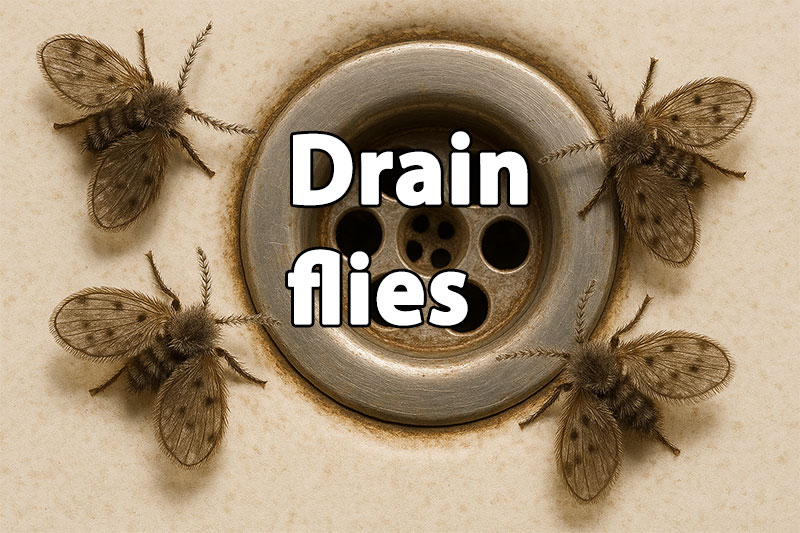
Drain flies, also known as sewer gnats, filter flies, or moth flies, are small, fuzzy insects that often appear around sinks, showers, and floor drains. While they don’t bite or spread disease directly, they can quickly multiply and become a nuisance in your home or business. If you’ve noticed tiny flies hovering near your drains, it’s time to take action.
In this guide, we’ll cover what drain flies are, why they appear, and most importantly, how to get rid of drain flies for good.
What Are Drain Flies?
Drain flies are tiny insects, usually about 1/16 to 1/4 inch long, with fuzzy bodies and moth-like wings. They thrive in moist environments where organic matter builds up, making drains the perfect breeding ground.
Common signs of drain flies include:
- Small fuzzy flies hovering near sinks, showers, or floor drains.
- Flies appearing in bathrooms, kitchens, or basements.
- Increased activity in the evening or when lights are on.
Why Do Drain Flies Appear?
Drain flies are attracted to stagnant water and decaying organic material. Inside drains, a slimy layer of organic buildup (called “biofilm”) forms over time. This layer provides food and breeding grounds for drain flies.
Typical causes include:
- Slow or clogged drains.
- Rarely used bathrooms or sinks.
- Leaky pipes or standing water.
- Organic buildup inside kitchen sink drains.
Step-by-Step Guide: How to Get Rid of Drain Flies
1. Identify the Source
Before you begin, make sure you know which drain or area the flies are coming from. Cover drains with clear tape overnight. If flies stick to the tape, you’ve found the breeding source.
2. Clean the Drain Thoroughly
Cleaning the drain is the most effective way to eliminate drain flies.
- Boiling water: Pour boiling water down the drain 1–2 times daily for a week.
- Drain brush: Use a pipe brush to scrub away slimy buildup.
- Baking soda and vinegar: Pour ½ cup of baking soda followed by 1 cup of vinegar. Let it foam, then flush with hot water.
3. Use Drain Cleaners (Natural or Chemical)
For stubborn infestations, consider enzymatic or bacterial drain cleaners. These eco-friendly solutions break down organic matter without damaging pipes. Chemical cleaners work too but should be used cautiously, especially in older plumbing.
4. Eliminate Standing Water
Check under sinks, near appliances, and in basements for leaks or puddles. Fix plumbing issues promptly, since even small amounts of stagnant water can attract drain flies.
5. Prevent Reinfestation
Once you’ve cleaned the drains, take preventive measures:
- Run hot water through drains weekly.
- Regularly clean sink stoppers and overflow areas.
- Use an enzymatic drain cleaner monthly.
- Keep bathroom and kitchen areas dry and well-ventilated.
Home Remedies vs. Professional Help
Most drain fly problems can be resolved with DIY methods. However, if the infestation persists after a couple of weeks, it may be a sign of a larger plumbing issue, like broken pipes or hidden water leaks. In such cases, professional pest control or a plumber should be consulted.
Frequently Asked Questions (FAQ)
Are drain flies harmful?
No, they don’t bite or spread diseases, but they can carry bacteria from drains onto surfaces.
How long do drain flies live?
Adult drain flies typically live for 1–3 weeks, but they reproduce quickly, making infestations persistent.
Can bleach kill drain flies?
Bleach may kill some larvae but usually isn’t effective at removing the organic buildup inside drains.
Conclusion
Drain flies are a common nuisance, but with the right approach, you can eliminate them quickly. By identifying the source, cleaning your drains, and maintaining good hygiene, you’ll keep these pests away for good.
If you’re struggling with a persistent infestation, don’t hesitate to contact a professional for help.
Remember: the key to getting rid of drain flies is cleaning and prevention.