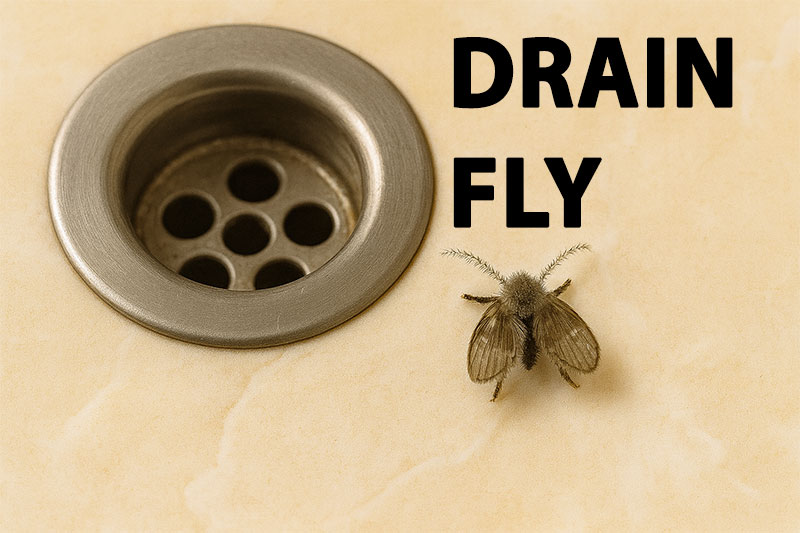
If you’ve ever noticed small, fuzzy flies hovering around your bathroom sink, shower, or kitchen drain, you’re likely dealing with drain flies. Also called moth flies, sewer gnats, or filter flies, these pests are common in homes and businesses with moisture issues.
But one of the biggest concerns people have when they see them is simple: are drain flies harmful?
In this article, we’ll break down whether drain flies are dangerous, what risks they pose, and how to protect your home from an infestation.
What Are Drain Flies?
Drain flies are tiny insects, measuring only 1/16 to 1/4 of an inch. They have fuzzy bodies and moth-like wings, which give them a unique, “hairy” appearance. Unlike fruit flies or gnats, drain flies live and breed inside damp areas with organic buildup—most often inside drains, sewers, and septic tanks.
They thrive in slimy films known as biofilm, which is made of decaying organic matter. This film provides both food and a breeding ground for the flies’ larvae.
Are Drain Flies Harmful to Humans?
The good news: drain flies are not directly harmful. They don’t bite, sting, or transmit diseases the way some insects do. For most people, they are simply an annoyance.
However, there are some important considerations:
1. Drain Flies Can Spread Bacteria
While they don’t carry diseases in the way mosquitoes do, drain flies often come into contact with sewage and decaying matter. When they land on kitchen counters, sinks, or food, they may transfer bacteria.
2. Drain Flies Can Trigger Allergies
In large infestations, tiny particles from dead flies or shed body parts may become airborne. For sensitive individuals, this can aggravate asthma or allergies.
3. Drain Flies Indicate Plumbing Issues
Perhaps the biggest concern is not the flies themselves, but what they signal. A drain fly infestation often means there’s a hidden plumbing problem—such as slow drains, leaks, or stagnant water.
Are Drain Flies Harmful to Pets?
Just like with humans, drain flies are not a direct threat to pets. They don’t bite dogs or cats, and they don’t lay eggs on animals. That said, pets may try to eat them. While generally harmless, eating insects that have been in dirty drains isn’t ideal.
Health Risks in Businesses
In commercial settings, especially in restaurants, hotels, or healthcare facilities, the presence of drain flies can create serious concerns:
- They may violate health codes.
- They create a poor impression for customers.
- They may contaminate food prep areas.
For businesses, eliminating drain flies quickly is crucial not just for cleanliness, but also for reputation.
How to Prevent Harm from Drain Flies
While drain flies themselves aren’t highly dangerous, the conditions that attract them can be. Here are preventive measures:
- Clean drains regularly with a brush and enzymatic cleaner.
- Flush drains with boiling water weekly.
- Fix leaks and avoid standing water.
- Keep sinks and bathrooms dry when not in use.
- Use an enzymatic drain treatment monthly to prevent biofilm buildup.
When to Call a Professional
If DIY cleaning doesn’t solve the problem within a week or two, or if the infestation keeps returning, you may need professional help. Persistent drain fly problems could point to broken pipes, hidden leaks, or septic system issues.
Frequently Asked Questions (FAQ)
Are drain flies dangerous to humans?
No, they don’t bite or spread serious diseases, but they can carry bacteria from drains.
Can drain flies make you sick?
While unlikely to cause illness directly, they may aggravate asthma or allergies in sensitive people.
Do drain flies go away on their own?
Not usually. As long as there’s organic buildup in drains, they’ll continue to breed.
Are drain flies harmful to pets?
No, but pets that eat them may ingest bacteria from dirty drains.
How do I know if I have drain flies?
Look for tiny moth-like flies around sinks, showers, or floor drains, especially in the evening.
Conclusion
So, are drain flies harmful? Not directly. They don’t bite or transmit diseases like some pests do. However, they are a sign of poor sanitation, plumbing problems, or stagnant water—all of which can lead to bigger issues if ignored.
By cleaning your drains regularly and fixing leaks promptly, you can prevent infestations and protect your household from the nuisance (and potential health risks) of drain flies.