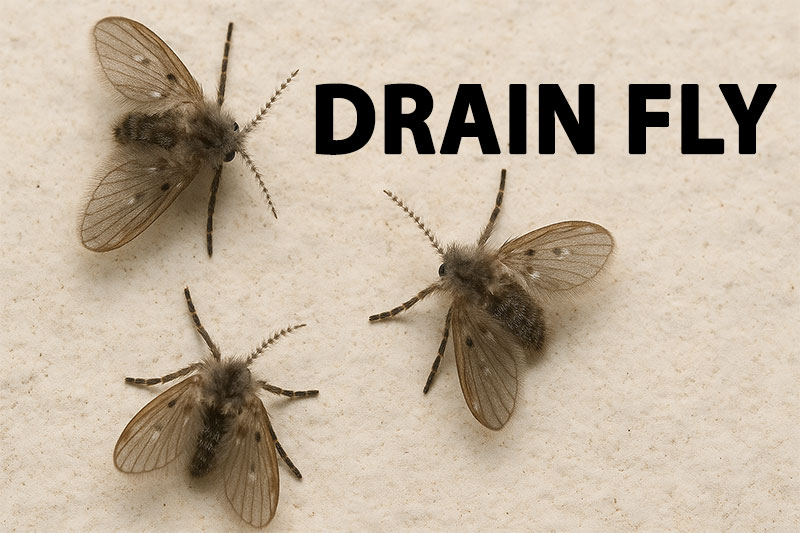
If you’ve noticed small, fuzzy flies hovering near your sinks, showers, or bathroom walls, you may be dealing with drain flies. Also known as moth flies, sewer gnats, or filter flies, these pests breed inside drains and thrive in damp, organic-rich environments.
While they don’t bite or spread major diseases, they multiply quickly and can be frustrating to eliminate. The good news is that with the right approach, you can eliminate drain flies completely and prevent them from returning.
Step 1: Identify the Source
The first step in eliminating drain flies is finding where they’re coming from.
- Check drains – Bathroom, kitchen, and basement drains are the most common breeding grounds.
- Do the tape test – Cover a suspected drain with clear tape overnight. If flies stick to the underside, you’ve found the source.
- Look for larvae – Shine a flashlight into drains. Larvae are small, worm-like creatures feeding on the slimy buildup inside pipes.
Step 2: Clean the Drains Thoroughly
Drain flies lay eggs in biofilm, a slimy layer of organic matter inside pipes. Removing this buildup is crucial.
Effective Cleaning Methods:
- Boiling Water – Pour boiling water down drains once or twice daily for a week.
- Baking Soda and Vinegar – Pour ½ cup of baking soda, then 1 cup of vinegar. Let it foam for 15 minutes, then flush with hot water.
- Drain Brush – Use a long brush to scrub the inside walls of pipes and remove organic buildup.
- Enzymatic Cleaners – Eco-friendly cleaners with natural bacteria and enzymes that break down biofilm without damaging plumbing.
Step 3: Kill Adult Drain Flies
While you’re treating the source, you’ll also want to reduce the adult population.
- Apple cider vinegar trap – A bowl of vinegar with a drop of dish soap attracts and drowns flies.
- Sticky traps – Place near sinks or drains to capture adults.
- UV light traps – Effective in bathrooms, kitchens, and basements.
Step 4: Prevent Reinfestation
Eliminating drain flies once isn’t enough—you need to stop them from coming back.
- Flush drains weekly with hot water.
- Use enzymatic cleaners monthly to prevent new buildup.
- Fix leaks quickly to avoid stagnant water under sinks or floors.
- Clean sink stoppers and overflow holes regularly.
- Improve ventilation in bathrooms and kitchens to reduce humidity.
Step 5: When to Call a Professional
If drain flies return even after thorough cleaning, the problem could be more serious. Possible causes include:
- Broken or leaking sewer pipes
- Septic tank issues
- Hidden plumbing leaks
In these cases, you’ll need help from a plumber or pest control professional.
Frequently Asked Questions (FAQ)
What kills drain flies instantly?
Boiling water and chemical cleaners can kill larvae quickly, while sticky or vinegar traps catch adult flies.
Does bleach eliminate drain flies?
Bleach may kill some larvae, but it usually doesn’t remove the biofilm where eggs and larvae develop.
How long does it take to eliminate drain flies?
With consistent cleaning, most infestations can be eliminated within 1–2 weeks.
What is the best long-term solution for drain flies?
Enzymatic drain cleaners are best for long-term prevention, as they break down organic buildup inside pipes.
Can drain flies come back after treatment?
Yes, if biofilm and standing water remain in drains, they will return. Preventive maintenance is essential.
Conclusion
Drain flies are annoying but manageable. By identifying the source, cleaning drains thoroughly, killing adult flies, and preventing reinfestation, you can eliminate drain flies for good.
If DIY methods don’t solve the problem, it may point to plumbing issues that require professional attention. Acting quickly ensures your home stays clean, safe, and free of drain flies.