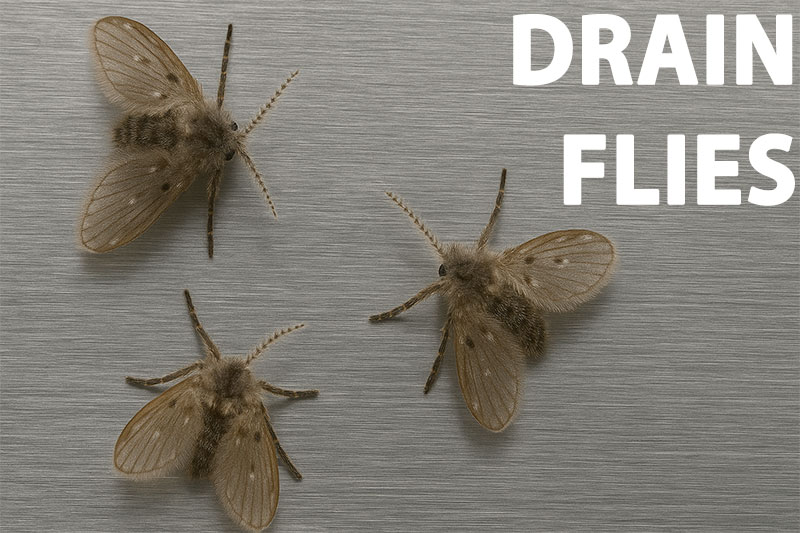
If you’ve spotted small, fuzzy insects hovering around your sink, shower, or bathroom walls, you may be dealing with drain flies. Also known as moth flies, sewer gnats, or filter flies, these pests are common in homes where moisture and organic matter build up inside drains.
Although drain flies don’t bite or spread major diseases, they reproduce quickly and can be difficult to eliminate if left untreated. The good news is, with the right methods, you can treat drain flies effectively and prevent them from coming back.
Step 1: Identify the Source
Before you can treat drain flies, you need to find their breeding ground.
- Look for activity near sinks, showers, and floor drains.
- Tape test: Place clear tape over a suspected drain overnight. If flies stick to the underside, that’s the source.
- Check for larvae: Shine a flashlight into drains. Drain fly larvae look like small, worm-like creatures feeding on slime.
Step 2: Clean the Drains Thoroughly
Drain flies breed in biofilm—the slimy buildup of organic matter inside drains. Cleaning drains is the most effective way to treat them.
Best Methods for Cleaning Drains:
- Boiling Water – Pour boiling water down drains once or twice a day for a week to kill larvae.
- Baking Soda and Vinegar – Add ½ cup of baking soda followed by 1 cup of vinegar. Let it foam for 15 minutes, then flush with hot water.
- Drain Brush – Use a long, flexible brush to scrub away slime and buildup from inside pipes.
- Enzymatic Cleaners – Eco-friendly cleaners that use bacteria to break down organic matter inside drains.
Step 3: Kill Adult Drain Flies
While cleaning drains removes larvae, you should also reduce the number of adult flies.
- Apple cider vinegar trap – A bowl of vinegar with a drop of dish soap attracts and drowns flies.
- Sticky traps – Place near sinks, showers, or tubs to capture adult flies.
- UV light traps – Useful for catching large numbers of flies in bathrooms or basements.
Step 4: Prevent Reinfestation
Once you’ve treated drain flies, prevention is key to keeping them away.
- Flush drains weekly with boiling water.
- Use enzymatic cleaners monthly to stop biofilm buildup.
- Fix leaks immediately to eliminate standing water.
- Clean sink stoppers and overflow holes regularly.
- Improve ventilation in bathrooms and kitchens to reduce humidity.
Step 5: When to Call a Professional
If drain flies keep coming back even after thorough cleaning, it may indicate a more serious problem such as:
- Broken or leaking sewer lines
- Septic tank issues
- Hidden plumbing leaks
In such cases, you may need to call a plumber or pest control specialist.
Frequently Asked Questions (FAQ)
What is the best treatment for drain flies?
The most effective treatment is cleaning drains thoroughly with a combination of boiling water, baking soda and vinegar, and enzymatic cleaners.
Will bleach treat drain flies?
Bleach may kill some larvae but doesn’t remove the biofilm where they breed, so it’s not a reliable long-term treatment.
How long does it take to treat drain flies?
With consistent cleaning, most infestations can be eliminated within 1–2 weeks.
Do I need a professional to treat drain flies?
Not usually. Most infestations can be treated with DIY methods, but persistent cases may require a plumber.
Are drain flies harmful?
No, they don’t bite or spread major diseases, but they can carry bacteria from dirty drains onto surfaces.
Conclusion
Knowing how to treat drain flies is the key to getting rid of them for good. Start by identifying the source, thoroughly cleaning your drains, and using traps to eliminate adult flies. Once the infestation is gone, maintain clean drains and proper ventilation to prevent reinfestation.
If the problem persists, don’t hesitate to call a professional—since drain flies often indicate hidden plumbing or sanitation issues.